
Martinez / Becoming an Activist
sign up or sign in to add/edit transcript
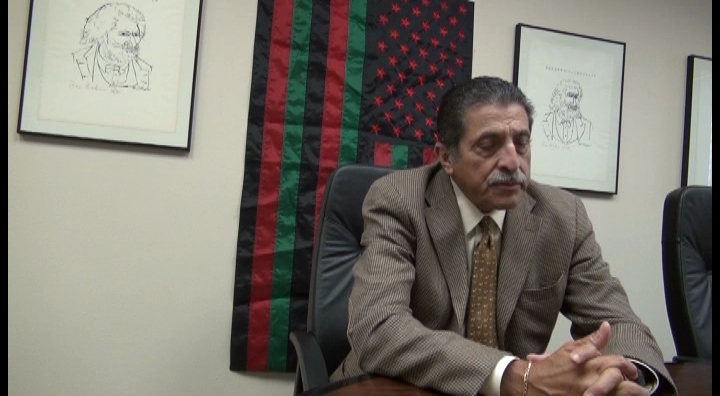
Interviewer-Why did you become active in the civil rights movement?" Mr. Martinez-My brother and I discussed that several years ago and we always wondered why because our involvement began, my involvement began, my involvement began very much so dealing with racial issues in West Dallas when I was a senior at SMU and I got involved in some issues at Thomas Edison Middle School and began coaching at the West Dallas Boys Club which was predominately African American, started coaching soccor, and so we kind of wondered why we looked at race from a different perspective. We grown up in a predominat Mexican American neighborhood. I never attended schools with African American students until I went to SMU and met Jared Labias, the famous all-american football player and we became very very close friends. We're still very close friends, we talk to each other every week. So, I didn't have that exposure with African Americans, but we wonder why we were brought up in a matter to look at race and ethnicity from a very respectful manner. In a manner of which we always tolerate and accepted racial differences and we felt that people should have the rights that they have to do without being discriminated. And, we found out later as we talked that my father, who grown up in Waco, in the 20s, had shared a story about a lynching in Waco and years later I shared the story to Roseanne Holmes, who's been a good friend and mentor of mine, and Roseanne was very surprised to hear that my dad, as a young man in Waco, in the early 20s, had witnessed a lynching and the lynching was a famous case, I think the young man was in Washington and lynched in Waco. Dad was coming from work as a teenager and witnessed it, and it had a tremendous impact on him as a young man from Mexico and my dad later told us the story and he didn't tell us the name of the person, he just said that he had witnessed something and he used that as an example of how people should not be treated in [?] that they were, and of course this was in the 20s and Roseanne later told me that of course that was a very historical event in Waco, in fact, it was the last lynchings it ever took place in that city and yet my dad was there. So, my brother and I kind of based that on as how we were brought up by a very strong man and woman that believed in civil rights and believed in people being treated equally, no matter who they were, [?] no matter what ther're language was or culture and that's the way we were raised, and that's basically how we were raised as children, and as young adults, and later as parents ourselves......
| Interview | Interview with Rene Martinez |
| Subjects | Race Relations › Black-Brown Race Relations |
| Discrimination or Segregation › Discrimination or Segregation at School | |
| White Resistance to Civil Rights › Extrajudicial Violence › Lynching | |
| Education › Secondary Education | |
| Education › Higher Education | |
| Family › Parents | |
| Tags | Southern Methodist University (SMU) |
| Thomas Edison Middle School, Dallas, TX | |
| Brooks, Marion | |
| Holmes, Zan | |
| Washington, Jesse | |
| sign up or sign in to add/edit tags | |
| Interview date | 2011-09-07 |
| Interview source | Documenting the History of the Civil Rights Movement in Dallas County |
| Interviewees | Martinez, Rene |
| Interviewers | Dulaney, W. Marvin |
| Thomas, Alfred | |
| Locations | Dallas, TX |
| Waco, TX | |
| Mexico | |
| Duration | 00:03:19 |
| Citation | "Becoming an Activist," from Rene Martinez oral history interview with W. Marvin Dulaney and Alfred Thomas, September 07, 2011, Dallas, TX, Civil Rights in Black and Brown Interview Database, https://crbb.tcu.edu/clips/6085/becoming-an-activist-5, accessed October 15, 2026 |